
Confirmed plenary speakers

Multidimensional assessment of emotional states in social insects
For a long time, social insects were considered simple reflexive automata, but they are now recognised as cognitively sophisticated organisms. Although cognitive sophistication does not automatically imply emotional experience, the recognition of social insect intelligence and behavioural flexibility raises a compelling question: might insects also experience basic emotions? Studying emotions in non-human animals is challenging because subjective experiences are not directly accessible. Therefore, adopting a functional, multicomponent framework, where emotional states are inferred from coordinated changes in behaviour, cognition, and physiology, is essential to advance the field without relying on subjective reports. This perspective supports the idea that insects may possess internal states functionally analogous to emotions, yet their systematic characterisation remains in its infancy. I will present our recent work applying this approach to honeybees and bumblebees, integrating behavioural, cognitive, physiological, and neurochemical evidence to characterise these states. Inspired by mammalian paradigms, such as fear conditioning and cognitive bias tests, we investigated whether insects exhibit fear-like responses to immediate or anticipated aversive stimuli, and how negative events influence attention and decision-making. While no single measure can distinguish between reflexive and genuine emotional responses, the convergence of behavioural, physiological, neurochemical, and cognitive evidence suggests that bees possess sustained, internally coordinated emotional states. Our findings further indicate that they share with vertebrates the core “building blocks” of affective states, namely valence, persistence, scalability, and global coordination, features widely regarded as hallmarks of emotions. These results have significant implications for our understanding of the evolution of emotions, invertebrate cognition, and welfare considerations.
Investigating the origin of eusociality in Hymenoptera
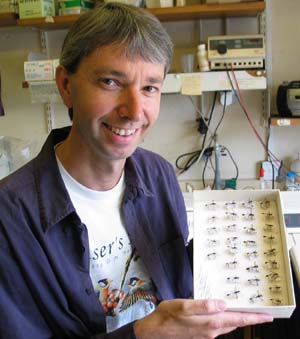
The evolution of eusociality from non-social ancestors in organisms such as bees and wasps is often thought of as one of the major evolutionary transitions. A division of labour, between reproductives (queens) that specialize on egg production and helpers (workers) that specialize on tasks such as foraging, is the key feature defining most forms of eusociality and is also thought to be the main reason why social insects are so successful ecologically. Research over recent decades has identified several genetic and ecological advantages of social nesting that should automatically favour helping when it first arises. Yet the reality is that only a small proportion of nest-building wasp and bee species are eusocial. The empirical study of how social behaviour evolves has naturally focussed on social taxa. However, this may not be appropriate for understanding the initial origin of sociality when, for example, morphological caste specialization will have been absent. Even in social taxa where females can still nest independently, helping probably originated >20 Myr ago, and such taxa indeed exhibit numerous derived features such as sophisticated dominance hierarchies and often linear correlations between group size and queen egg-laying rates. I will discuss experiments, observations and ideas about how non-eusocial taxa can help us understand what promotes and constrains the origin of eusociality, and likely scenarios for its evolution. At the same time, I emphasize the importance of continuing to investigate hitherto little-studied lineages rather than restricting the focus to a few ‘model’ taxa.

Shared ecological pressures and convergent co-option of ancient hormonal pathways underlie independent origins of eusociality
Social insects exhibit an extraordinary diversity of social forms, both within and among species. This behavioral variation is the product of both the underlying genes and the broader ecological factors that influence the costs and benefits of social living. Understanding social evolution requires a clear understanding of both mechanisms. Sweat bees have repeatedly gained and lost eusociality, providing replicated natural experiments to ask how social behavior arises and is modified. Our ecological and theoretical studies have revealed that season length and development time together shape social strategies: long seasons promote social nesting, short seasons favor solitary nesting, and intermediate seasons can support both. These model predictions match observed distributions across natural populations, revealing how ecological conditions can shape social variation in these bees. At the molecular level, we have identified convergent and complementary signatures of selection on a small number of sweat bee genes, including two primary proteins that bind and transport juvenile hormone (JH), an ancient regulator of insect development. We have shown that JH crosses the blood-brain barrier in both bees and ants, and that experimentally increasing brain JH influences caste-related foraging behaviors in ants. Ongoing single-nucleus transcriptomic analyses indicate that, across independent origins of eusociality, queens and workers exhibit shared, brain-wide differences in hormonal states as well as cell-type specific expression profiles. This suggests that hormonal access to the brain is a recurring substrate for social evolution across multiple insect lineages, and that ancient hormonal pathways can reshape social brains through differential action on conserved cellular targets. Taken together, our findings reveal how both ecological context and molecular mechanisms influence the evolution of eusociality.

Engineering a Queen: How Honey Bees Shape Development Through Architecture, Materials, and Collective Behavior
The remarkable ability of honey bee colonies to produce either workers or queens from genetically similar larvae has fascinated scientists for more than a century. While nutrition has long been considered the primary factor determining queen development, the potential role of the queen cell itself has received far less attention. In this lecture, I will present findings from our recent study published in Nature, which reveals an unexpected connection between queen cell architecture and honey bee queen development. Through a combination of behavioral observations, material analyses, and experimental manipulations, we investigated how worker bees construct queen cells and how the physical properties of these structures differ from those of regular worker comb cells. Our results demonstrate that queen cells are not simply enlarged versions of worker cells. Instead, they possess distinct structural and mechanical characteristics that influence the developmental environment of the queen larva. We further show that worker bees actively modify beeswax through specialized processing mechanisms, enabling the construction of these unique royal chambers. These findings challenge traditional views of caste development in honey bees and highlight the importance of nest architecture as an active component of developmental regulation. Beyond advancing our understanding of honey bee biology, this work provides new insights into how social insects shape developmental outcomes through the construction of specialized environments.

How can ants help to address open questions in speciation and hybridization?
To protect biodiversity, we need to understand how it arises. The evolution of new species depends on the evolution of reproductive isolating barriers. However, the genomic basis of species barriers is unknown in most taxa. On-going global change is predicted to erode species barriers: changing environment leads to movement of species bringing previously isolated lineages into secondary contact promoting hybridization. How do increased rates of hybridization impact biodiversity? Ants and other haplodiploids offer unique opportunities to understand the genomic basis of reproductive isolation and outcomes of hybridization. Haploid males reveal selection acting on recessive alleles and sequencing males provides entire haplotypes without the need for phasing. Long-lived queens and colonies allow studying selective pressures acting on species and hybrids over multiple years and seasons. Using mound-building wood ants we have shown that the species barrier is semipermeable, leading to gene flow between species, yet keeping species distinct even under high rates of hybridization. Hybridization does not erode the species barrier likely due to complex interactions among genomic regions underlying the barrier. Hybridization leads to both fitness costs and benefits, where hybrid wood ants suffer from intrinsic incompatibilities but benefit from warming climate and are rapidly extending their range northwards. Replicate hybrid populations reveal surprising repeatability, suggesting evolution of hybrids is to some extent predictable.

Chemical causes and disease consequences of social behaviour in a clonal ant
Sociality confers both benefits and costs: cooperation can enhance group performance, but close social interactions also promote disease spread. In this talk, I will present recent and ongoing work on the chemical bases and epidemiological consequences of social behaviour in the clonal raider ant Ooceraea biroi, a queenless, asexual species that provides unusual experimental control and an expanding toolkit for causal tests. We ask how social interactions influence both disease transmission and protection, using experimental infections with a range of pathogens and parasites, including fungi, bacteria, and nematodes. Our work shows that individual behavioural roles predict infection risk, and that infection can in turn shape host behaviour in ways that feed back on disease dynamics. Social organisation, in turn, emerges from local interactions between individuals mediated largely by chemical cues. I will highlight recent progress toward uncovering the chemical basis of social behaviour in O. biroi by identifying pheromones, characterising their behavioural effects, and tracing their biosynthetic pathways. This includes a volatile larval pheromone that suppresses worker egg-laying and regulates colony reproductive cycles. Together, this work illustrates how O. biroi lets us begin to dissect the mechanistic bases of social behaviour, complementing the strengths of other social-insect systems.
